

Ocean Data Assimilation Scientist
Submitted by Nico on Fri, 2015-02-06 02:44Tales of future weather
Submitted by LinaKang on Fri, 2015-02-06 02:40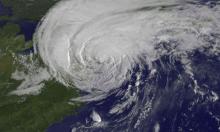
Society is vulnerable to extreme weather events and, by extension, to human impacts on future events. Today a new study by researchers from the Royal Netherlands Meteorological Institute (KNMI) was published in Nature Climate Change. Combining weather models and climate models potentially provides complementary, more realistic and more physically consistent pictures of what future weather might look like. Wilco Hazeleger, Director of NLeSC, is first author of the published study.
Watch a 1,000-Foot-High Wave Move Across the Ocean
Submitted by LinaKang on Fri, 2015-02-06 01:20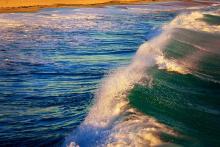
Right now, two research vessels carrying some 40 marine scientists are battling stormy conditions in the Tasman Sea to learn more about gigantic subsurface waves—some 1,000 feet high—that are critical to both ocean health and accurate climate modeling.
Director of SAMS, CEO of SAMS Group
Submitted by LinaKang on Wed, 2015-01-28 03:26Postdoctoral position in ocean modelling
Submitted by LinaKang on Wed, 2015-01-28 03:22postdoctoral researcher in seasonal sea ice forecasting
Submitted by LinaKang on Wed, 2015-01-28 02:58Postdoctoral Associate in Physical Oceanography
Submitted by LinaKang on Wed, 2015-01-28 02:43Report of the 21st Session on the CLIVAR Scientific Steering Group
Submitted by Nico on Wed, 2015-01-28 02:2210-12 November 2014
Moscow, Russian Federation
4th CLIVAR Workshop on the Evaluation of ENSO in Climate Models: ENSO in a changing climate
Submitted by admin on Mon, 2015-01-26 04:47The El Niño – Southern Oscillation (ENSO) is the dominant mode of interannual climate variability on Earth, with worldwide impacts. Because ENSO involves a complex interplay of ocean and atmospheric processes, accurately modelling this climate phenomenon with coupled General Circulation Models (GCMs), and understanding and anticipating its behaviour in a warming climate, still pose major challenges.