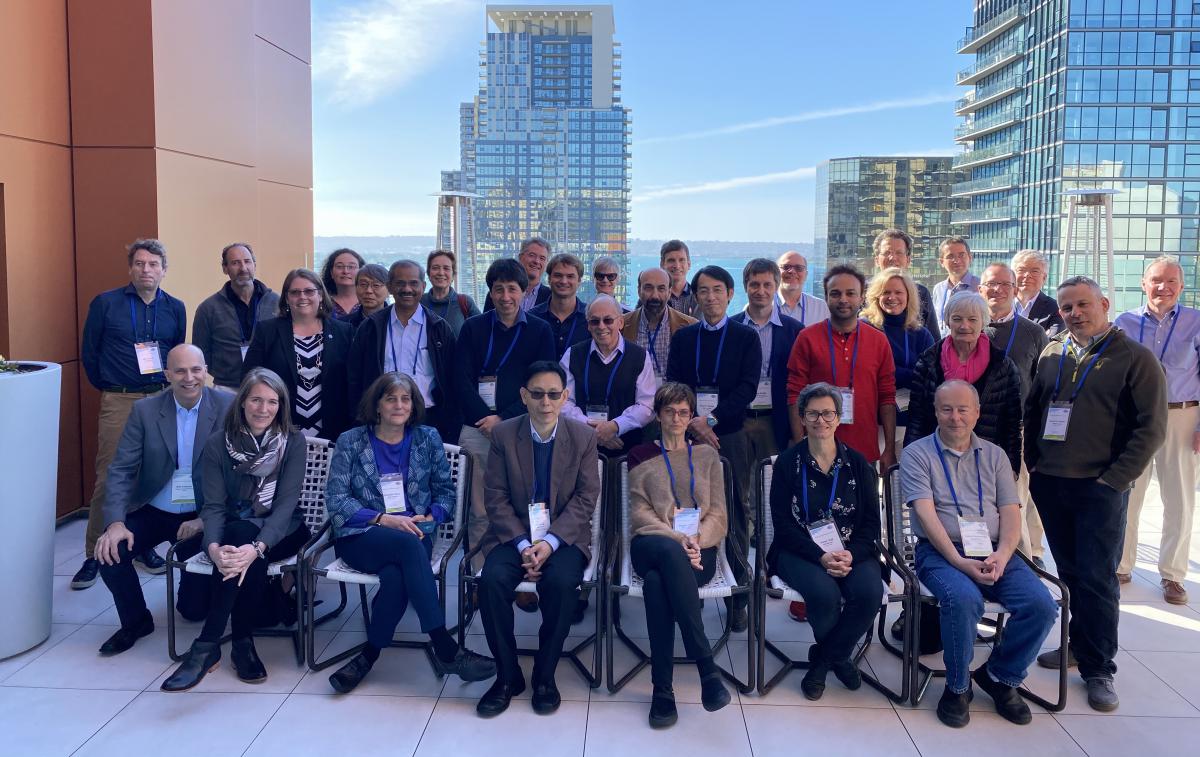
Southern Ocean CLIVAR/CliC Panel meeting

Draft Agenda

CSIRO Marine Research Laboratories, Hobart, Tasmania, Australia

11-13 March, 2002

March 11

0845-0900 Welcome and purpose of the meeting (Rintoul)
0900-0930 Overview and status of CLIVAR (Gould)
0930-1030 Overview of progress to date in implementation of SO CLIVAR (Rintoul)
1030-1100 Coffee break
1100-1130 Overview of CliC, including elements relevant to the understanding of the Southern Ocean (Allison, Fahrbach)
1130-1200 Discussion: CLIVAR/CliC integration
1200-1230 Sea ice (Allison, Martinson)
1230-1400 Lunch
1400-1430 Science talk: Impact of the mid/high latitude ocean on southern hemisphere regional climate: A South African example (Reason)
1430-1530 Meteorology, air-sea coupling and telecosnnections (Simmonds)
1530-1600 Coffee break
1600-1645 Modelling: recent results of coupled and ocean-only models relevant to SO CLIVAR; observations needed to test and improve models (Madec)
1645-1730 Carbon uptake and storage in the Southern Ocean (Sabine)
evening Social activity (to be advised).

March 12

0830-1230

Summary of national programmes (see below note):

  • Australian programme (Rintoul)
  • Chinese programme (Dong)
  • French programme (Morrow)
  • German programme (Fahrbach)
  • Italian programme (Spezie)
  • Japanese programme (Aoki)
  • NZ programme (Sutton?)
  • Russian programme (Klepikov)
  • SA programme (Reason)
  • Scandinavian programs (Fahrbach?)
  • South Atlantic and South American activities (Campos)
  • UK programme (Heywood)
  • US programme (Gordon)
1230-1330 Lunch
1330-1730 Science symposium with Argo Science Team:

The value of Southern Ocean observations

A joint scientific symposium between the International Argo Science Team and the Southern Ocean CLIVAR/CliC panel (20 minute talks + 5 minutes discussion)
1330 Introduction: the Southern Ocean's role in climate (Rintoul)
1355 Southern Ocean response to climate change (O'Farrell)
1420 Carbon uptake and accumulation in the Southern Ocean and sensitivity to change (Sabine)
1445 Modes of variability in the atmosphere-ocean system of the southern hemisphere (Simmonds, Reason)
1510 Observed changes in the southern hemisphere oceans and the need for an expanded observing system (Bindoff)
1535 Coffee
1600 Southern Ocean water mass transformation and connections to lower latitudes (Speer)
1625 How to extend Argo into the high latitude Southern Ocean (Fahrbach)
1650 Ocean state estimation and operational oceanography: the need for southern hemisphere observations (N.Smith)
1715 Discussion: challenges and opportunities for implementation of Southern Ocean Argo (Rintoul, Roemmich)
1800 Drinks with Argo Science Team at CSIRO


13 March

0830-0930 Southern Ocean time series stations (Send, Speer)
0930-0950 Science talk: Improved SST from multiple satellite sensors (Barton)
0950-1010 Remote sensing: Discussion of panel actions required
1010-1040 Data management issues (Aoki, Fahrbach)
1040-1100 Coffee break
1100-1120 Science talk: Southern Ocean variability: Lessons from ice cores (Morgan)
1120-1140 Science talk: Southern Ocean variability: Lessons from sediment cores (Howard)
1140-1200 Paleoceanography discussion (Rintoul; paper from Froelich)
1200-1300 Lunch
1300-1500 Summary discussion of national/international plans and the way forward:
  • Identify gaps and strategy to fill them
  • Particular logistical/technological constraints in the SO
1500-1530 Coffee
1530-1600 Science talk: Indian Ocean - Southern Ocean interactions (Meyers)
1600-1645 SO panel interaction with other basin panels, working groups and programmes.
1645-1730 Review action items, writing assignments, plans for next meeting
evening Dinner at Meadowbank Vineyard (with Argo Science Team)


Summary of national programmes:

We'd like to ask each person outlined below to write a very brief report (using as a basis the national reports) which can be distributed prior the meeting.
During the morning of the 12th we'll have about 15 minutes to discuss each country's report. The discussion should concentrate of the following issues:

-Motivation for the research
-Possible collaboration
-Where are people short of resources? (See previous!)

People may be allowed to speak if they wish, but we must keep within the time constraints.
Note that there is time scheduled the following day (1300-1500) to discuss particular aspects of the reports.
Please note that the above is a draft outline only.

Look forward to seeing you in Hobart,

Steve, Eberhard & Mike


Last update: 2/27/02 by Andreas Villwock